
- Diagnostic Instruments
- Scalpels & Dissecting Knives
- Scissors & Plaster Instruments
- Dressing & Tissue Forceps
- Hemostatic & Dressing Forceps
- Retractors
- Suction & Access Instruments
- Needle Holders & Suturing Instruments
- Bone Surgery Instruments
- Ophthalmic Instruments
- ENT Instruments
- Urology Instruments
- Intestinal & Rectal Instruments
- Gynecology & Obstetrics Instruments
- Hollow Wares
- Dissecting & Laboratory Instruments








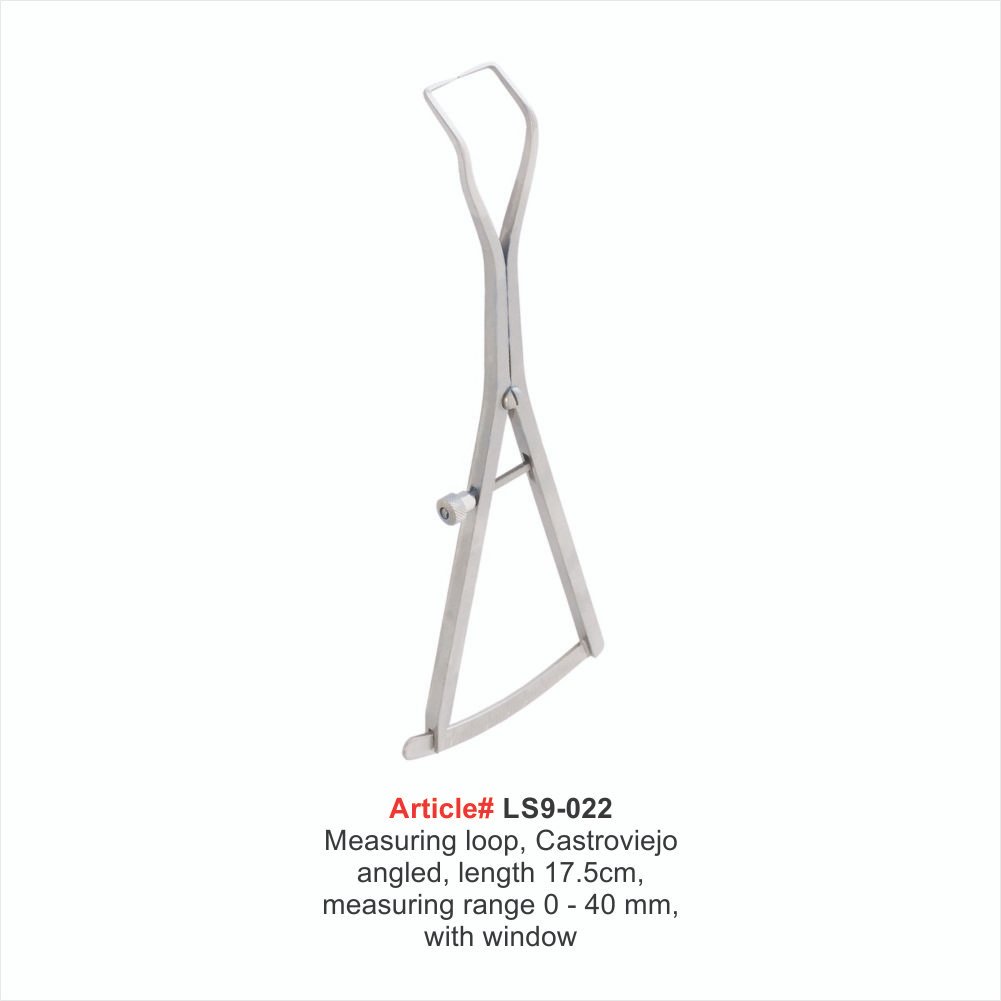
Weiss Modified Castroviejo Caliper
Extended-range stainless steel caliper with screw-lock mechanism for precise intraoperative ridge mapping and bone width measurement.
Key Features:
• German-grade stainless steel with passivated corrosion-resistant finish
• 17.5cm overall length for extended intraoral reach
• 0–40mm engraved scale with 1mm increment markings
• V-shaped box-tip jaws for stable bilateral tissue contact
• Thumb-operated screw lock for secure measurement retention
• Straight shaft design for unobstructed linear access
• Suitable for ridge mapping and crestal bone width assessment
• Autoclavable at 134°C with maintained alignment and scale clarity
SKU:
LS9-022
Categories: Dental, Implant Instruments, Implantology
Weiss Modified Castroviejo Caliper
The Weiss Modified Castroviejo Caliper is constructed from German-grade stainless steel with a passivated finish that actively resists corrosion during repeated clinical use. The instrument measures 17.5 cm (approximately 6.75 inches) in overall length and tapers progressively from the screw-lock body toward the working tips. The graduated scale runs from 0 to 40 mm in 1 mm increments, etched along the inner shaft. The V-shaped, box-tip jaw design opens bilaterally, and the thumb-operated screw mechanism locks the jaw position firmly once the target measurement is recorded.
The Straight shaft configuration allows unobstructed linear access to alveolar bone surfaces, while the castroviejo curved caliper variant accommodates angled approaches to posterior ridge anatomy. The screw-lock hold maintains jaw separation without drift, securing the measurement for documentation or transfer. The instrument withstands full autoclave sterilization at 134°C and is also compatible with ultrasonic cleaning and chemical disinfection protocols. Passivation treatment prevents surface oxidation, and the instrument passes standard boil, performance, and shape quality-control tests before dispatch.
The Weiss Modified Castroviejo Caliper is used by oral surgeons and implantologists during pre-implant bone ridge mapping procedures. Before implant placement, the surgeon presses the pointed box tips through the mucosal tissue at planned implant sites, allowing the tips to contact the underlying cortical bone directly. The 0–40 mm scale then delivers a direct crestal bone width reading, which guides implant diameter selection and positioning. This technique, performed as a standard step within the ridge mapping caliper protocol, eliminates reliance on radiographic estimation alone.
Leader Surgical brings the same disciplined attention to instrument sourcing that implant surgeons bring to bone preparation, selecting only instruments whose geometry, material grade, and measurement accuracy meet the demands of live tissue contact. With validated sterilization compatibility, corrosion-resistant construction, and a jaw-locking mechanism trusted across dental implant workflows, this caliper reflects the standard that discerning surgical teams expect from every instrument in their tray.
What is the difference between a standard Castroviejo and the Weiss Modified version?
The Weiss Modified version is specifically designed for “ridge mapping” in dental implantology. Unlike standard ophthalmic versions that typically only measure up to 20mm, this model features a wider 0–40mm scale and curved, pointed tips. These specialized tips are designed to penetrate soft tissue to measure the actual thickness of the underlying bone ridge without reflecting a flap.
We're here to help!
HAVE QUESTIONS?
Fill out the form, and our team will respond promptly to assist with your product inquiries or order support.