
- Diagnostic Instruments
- Scalpels & Dissecting Knives
- Scissors & Plaster Instruments
- Dressing & Tissue Forceps
- Hemostatic & Dressing Forceps
- Retractors
- Suction & Access Instruments
- Needle Holders & Suturing Instruments
- Bone Surgery Instruments
- Ophthalmic Instruments
- ENT Instruments
- Urology Instruments
- Intestinal & Rectal Instruments
- Gynecology & Obstetrics Instruments
- Hollow Wares
- Dissecting & Laboratory Instruments








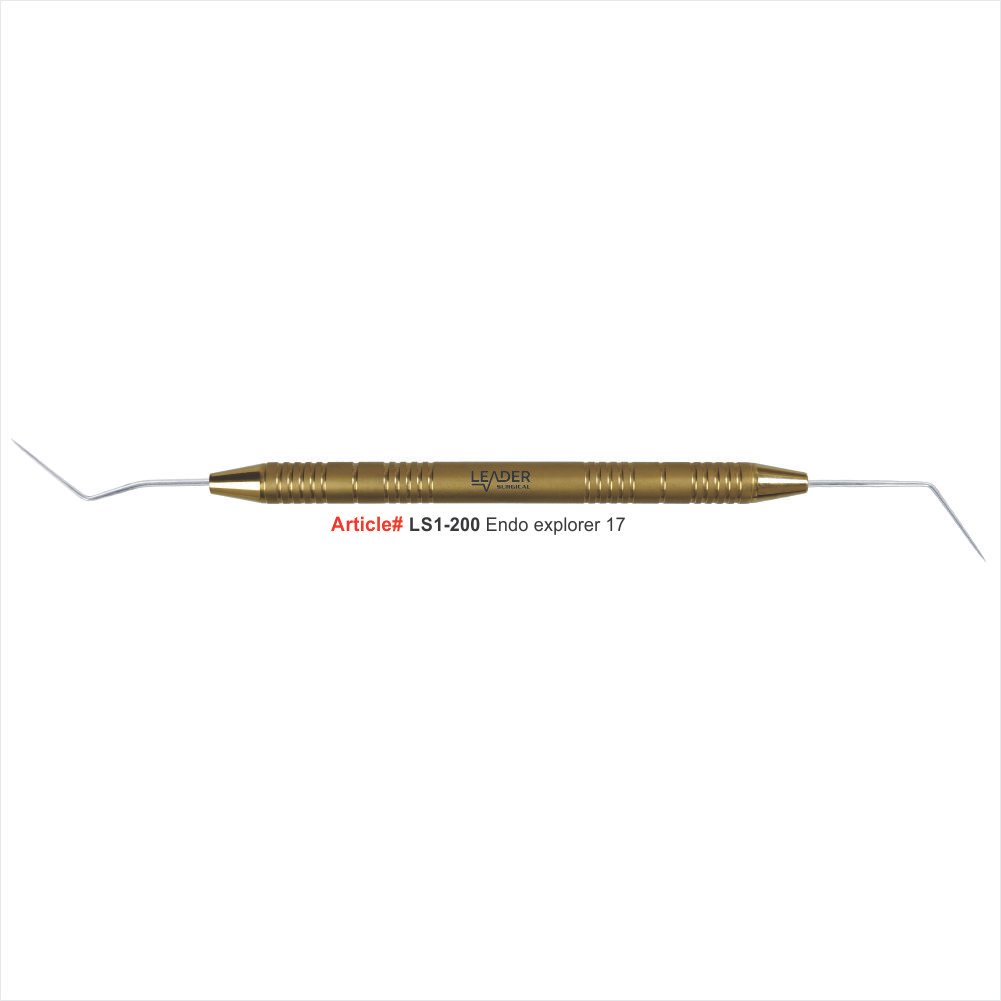
DG16/17 Endo Explorer
Double-ended endodontic explorer with sharp angled tips for precise canal orifice detection and tactile exploration.
Key Features:
• Double-ended design with DG16 and DG17 angled explorer tips
• Long, thin sharply pointed tips for canal orifice detection
• Opposing shank angulations for anterior and posterior access
• Gold titanium nitride (TiN) coating for reduced friction and wear resistance
• Enhanced corrosion resistance with repeated autoclave sterilization
• Designed for locating calcified or hidden canal entries
• Ringed knurled handle for controlled modified-pen grip
• Surgical-grade stainless steel construction, autoclavable at 134°C
SKU:
LS1-200
Categories: Dental, Diagnostic and Periodontal Instruments, Explorers
DG16/17 Endo Explorer
The DG16/17 Endo Explorer is a double-ended endodontic diagnostic instrument constructed from surgical-grade stainless steel with a gold titanium nitride surface coating applied to the full instrument body, clearly visible across the handle and shank in the instrument profile. Developed from the original DG16 design by Dr. David Green in 1951, the instrument features two long, thin, sharply pointed shanks angled in opposing directions from the central handle axis. One end carries the DG16 geometry for standard anterior and posterior canal orifice detection, while the other carries the DG17 configuration with a different shank bend for alternate-angle posterior access. The ringed knurled handle supports a modified pen grasp with minimal hand fatigue during repeated exploration strokes.
The gold TiN coating serves a functional purpose beyond aesthetics — it reduces surface friction during canal entry, improves corrosion resistance, and extends the instrument’s working life through repeated autoclave sterilization cycles. Unlike a periodontal explorer, which maps sulcular depths and root surface irregularities, the DG16/17 tip geometry is specifically optimized for penetrating narrow canal orifices within the pulp chamber floor and detecting the direction of the canal as it exits apically.
Endodontists use the DG16/17 Endo Explorer during root canal access preparation to locate calcified, hidden, or additional canal orifices. The clinician drags the sharp tip across the pulp chamber floor using short, controlled tactile strokes — a “catch” sensation at a canal orifice confirms its position. The instrument also removes soft calcification deposits overlying canal entries and verifies canal angulation before the first file is introduced.
Leader Surgical produces this explorer to consistent tip geometry, verified stainless steel composition, and a durable gold TiN surface coating that withstands repeated sterilization without degradation.
How does an endo explorer differ from a standard explorer?
Endodontic explorers, such as the DG16/17, feature longer and thinner shanks. This design is optimized for navigating narrow root canal orifices and identifying cracks or resorptive lesions within the tooth’s inner pulp.
We're here to help!
HAVE QUESTIONS?
Fill out the form, and our team will respond promptly to assist with your product inquiries or order support.