
- Diagnostic Instruments
- Scalpels & Dissecting Knives
- Scissors & Plaster Instruments
- Dressing & Tissue Forceps
- Hemostatic & Dressing Forceps
- Retractors
- Suction & Access Instruments
- Needle Holders & Suturing Instruments
- Bone Surgery Instruments
- Ophthalmic Instruments
- ENT Instruments
- Urology Instruments
- Intestinal & Rectal Instruments
- Gynecology & Obstetrics Instruments
- Hollow Wares
- Dissecting & Laboratory Instruments








Surgical Instruments, Vets Know Better Than Human Surgeons

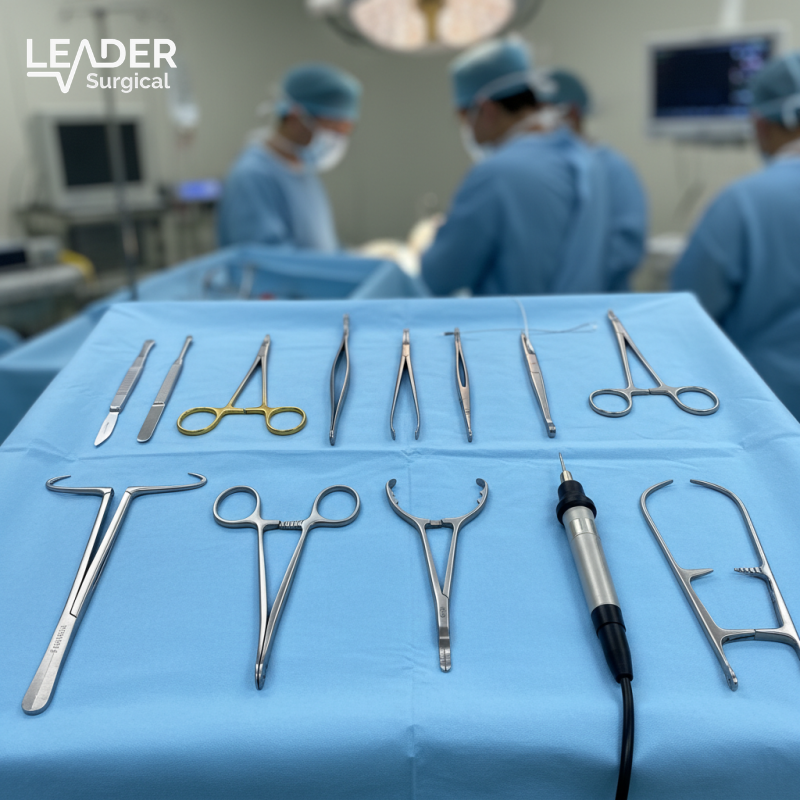
Veterinary surgeons work on patients that cannot speak, cannot describe pain, and range from a 50-gram bird to a 500-kilogram horse, sometimes back to back. That kind of pressure teaches you things about surgical instruments that a controlled hospital OR simply never will.
This blog covers what the veterinary world has learned about instruments, why those lessons matter for every surgical setting, and why sourcing from a trusted manufacturer like Leader Surgical makes a great clinical difference. Keep reading, some of this might surprise you.
Veterinary Surgeons Operate Across More Diverse Cases
A human orthopedic surgeon works on human anatomy. A veterinary surgeon might operate on a rabbit, a German Shepherd, and a horse in the same week.
Small mammals, reptiles, and avian species each require a tailored surgical approach, their tissue characteristics, blood volume, and thermoregulatory properties are all different. That kind of variation demands instruments with consistent precision across wildly different anatomical scales.
Instruments for equine surgery differ significantly from those used in small animal surgeries. Tools must also cater to unique anatomical features, such as longer limbs in horses or delicate internal organs in smaller pets.
Leader Surgical covers this full range. From micro instruments used in avian surgery to large-format tools for equine procedures, the same manufacturing standard applies throughout.
Why Surgical Instrument Durability Is a Bigger Deal in Vet Practice
| Factor | Human Surgery | Veterinary Surgery |
| Patient size range | Narrow | Extremely wide |
| Operating environment | Controlled OR | Often field or mobile |
| Sterilization frequency | Standard cycles | Multiple cycles per day |
| Tissue resistance | Predictable | Varies by species |
| Instrument stress per use | Moderate | Often high |
Veterinary instruments face more mechanical stress per procedure. Tougher tissue, variable body sizes, and field conditions all push instruments harder than a standard OR does.
Inadequate sterilization can lead to the spread of bacteria, viruses, and fungi, resulting in complications for both animals and veterinary staff. In busy clinics, instruments cycle through autoclaves multiple times daily. Instruments that degrade under repeated heat and pressure become a patient safety issue, fast.
Leader Surgical designs its veterinary instruments from medical-grade stainless steel specifically to hold up under these conditions. Structural integrity across hundreds of sterilization cycles is a baseline requirement, not a bonus feature.
What Sterilization Does to a Cheap Instrument
Most people do not think about what repeated autoclaving does to instrument quality over time.
Many instruments are rated to have a limited useful life, measured by the number of sterilization cycles. After a preselected number of cycles, the instrument no longer has assured functionality and should be discarded or rebuilt.
Research confirms this. Studies using scanning electron microscopy have shown that surface topography deteriorates significantly after multiple sterilization cycles in instruments that lack adequate surface integrity.
What that means practically:
- Corroded surfaces are harder to fully sterilize
- Degraded joints affect clamping and cutting precision
- Weakened tips increase intraoperative failure risk
Leader Surgical instruments are built to resist exactly this kind of degradation. The metallurgy holds up where cheaper instruments do not.
The Corrosion Problem Vets Know Well
Veterinary environments introduce corrosive elements that most human ORs never encounter. Animal waste, biological fluids, saltwater in aquatic animal medicine, and field-grade disinfectants all affect instrument surfaces over time.
Using harsh disinfectants can corrode or damage delicate instruments. Neglecting regular maintenance leads to suboptimal performance and increased replacement costs.
Corrosion on a surgical instrument is not just a cosmetic issue. It:
- Compromises sterilization effectiveness
- Creates microscopic crevices that harbor bacteria
- Weakens the structural integrity of joints and hinges
Medical-grade stainless steel, what Leader Surgical uses across its entire product range resists corrosion even under aggressive cleaning protocols. That matters in the field. It matters in the clinic. It also matters in any human surgical setting where instruments face heavy sterilization loads.
Ergonomics: Why Vet Surgeons Push for Better Instrument Design
Veterinary surgeons frequently work in positions that human surgeons simply do not. Animals cannot always be positioned ideally. A full scrub team is not always available. Awkward angles are routine.
Needle holders alone come in multiple variations, smooth jaw for fine suture material, diamond dust jaws for very fine needles, ceramic jaws, and titanium versions for reduced weight and greater strength. That level of design differentiation exists because instrument ergonomics directly affect procedural outcomes.
Ergonomic instruments reduce:
- Hand fatigue across long procedures
- Grip errors under pressure
- Repetitive strain injury risk over a career
Leader Surgical treats ergonomic design as a standard requirement. Balanced construction and optimized grip geometry are built in, not added as a premium tier.
Why Full Sets Are Better Than Piecemeal Tools
A veterinary surgeon working in a remote or mobile setting cannot call for a missing instrument mid-procedure. The set has to be right before the first incision.
Veterinary surgery demands the same level of precision, skill, and instrument quality as human medicine. Complete veterinary surgical sets include a curated selection of instruments required for specific procedures.
A well-matched set from a single manufacturer means:
- Consistent weight and balance across tools
- Matching sterilization tolerances
- Uniform quality control on every piece
Leader Surgical supplies complete surgical instrument sets alongside individual instruments, so procurement teams can stock with confidence and surgeons can operate without gaps.
What a High-Stress Vet Environment Reveals About Instrument Quality
Here is the thing that often goes unspoken: veterinary practice is one of the most reliable stress tests for surgical instrument quality that exists.
High cycle counts, variable environments, wide anatomical range, and aggressive sterilization all expose instrument weaknesses within months, not years. What survives that environment is genuinely well-made.
Evaluation of sterilization protocols under veterinary hospital conditions is essential, where infrastructure and environmental parameters may significantly influence the maintenance of sterility.
Instruments from Leader Surgical have been used in these demanding settings across global markets. The quality control that goes into every instrument before delivery reflects those real-world demands. Every piece is inspected and tested. Nothing ships that has not passed.
If your procurement decisions are still based on price alone, this is the moment to reconsider. Quality instruments are not a cost. They are what reliable surgical outcomes are based on.
Frequently Asked Questions
Are veterinary surgical instruments the same as human surgical instruments?
Many instrument types overlap. Forceps, scissors, needle holders, and retractors are used in both fields. The difference is in performance demands. Veterinary instruments face more variable conditions, wider anatomical range, and higher sterilization frequency.
What material should surgical instruments be made from?
Medical-grade stainless steel is the standard for both human and veterinary surgical instruments. It provides corrosion resistance, structural durability under repeated sterilization, and long-term functional consistency.
How many sterilization cycles can a surgical instrument handle?
That depends entirely on material quality and manufacturing. Lower-grade instruments show surface degradation after as few as five autoclave cycles. Quality instruments built from proper-grade stainless steel maintain integrity across significantly more.
Why do vets need different instruments for different species?
Anatomy varies dramatically across species. Tissue resistance, organ size, limb length, and blood volume all differ. Research from NIH confirms that each exotic or non-standard species requires a tailored surgical approach, which means instruments must be sized and designed accordingly.
What should clinics look for when buying surgical instrument sets?
Material grade, sterilization cycle tolerance, ergonomic design, and set completeness are the key factors. Sourcing from a manufacturer with rigorous pre-delivery quality control, like Leader Surgical reduces long-term procurement cost and intraoperative risk.
Why do cheap surgical instruments cost more in the long run?
Lower-grade surgical instruments degrade faster under sterilization. They need replacement sooner, and they carry a higher risk of mid-procedure failure. The replacement cycle ends up costing more than investing in quality instruments upfront.
Can the same instruments be used for both large and small animal surgery?
No. Instruments are sized for anatomical context. Large and small animals need different sizes and strengths. Leader Surgical provides proper dedicated instruments for both large and small animal surgery.